Google 'Nexus One' pictured, rumored coming to T-Mobile
While reports suggest Google will independently sell its new "Nexus One" phone contract-free, U.S. carrier T-Mobile is rumored to also offer the new handset.
Apple to delay iMac orders, citing display issues
Graphics issues have caused Apple to delay shipments of the 27-inch iMac model until the cause of the problem can be determined.
Apple authorized resellers have reported delays in shipments of new 27-inch iMac models due to reports of display problems. Reports of flickering screens and yellow-tinged displays have become more common around the internet, so much so that a website has been created to catalog reports of issues from users.
According to the Apple iMac (Fall 2009) Issues blog, out of 678 respondents, nearly half have had problems with flickering displays. The author does note that the numbers are part of an “unscientific survey” and should not be considered representative of all iMacs sold.
The blog also reports that Apple resellers have been told of delays of 2 weeks in order to give Apple time to replace the graphics cards on the 27-inch iMacs. The iMac model in question comes in either dual-core or quad-core formats and contain the AMD ATI Radeon HD 4670 or 4850 model graphics cards.
Computerworld reported that multiple U.S. resellers report delays of anywhere from five days to two months.
AppleInsider noted in late November that users were reporting issues with the 27-inch model, with some receiving dead computers and others receiving models with cracked displays. Issues of stuttering when playing flash content were also common and were fixed for some by an update in early November.
Windows 7 USB Download Tool Lets You Install Windows from a Thumb Drive
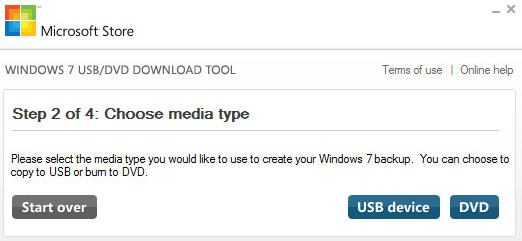
If you’re trying to install Windows 7 on a netbook (or are having issues with your PC’s optical drive), the free USB Download Tool from Microsoft allows you to take a .ISO image and turn it into a bootable flash drive.
This was created not only for netbook users, but for anyone that opted to download Windows 7 from Microsoft in lieu of ordering an installation DVD. Windows 7 USB Download Tool can create a bootable flash drive (or DVD, if you prefer) from the downloaded .ISO file in quick fashion—just install it and follow the on-screen prompts. Note that if you opt to use a flash drive, it must be 4GB or larger to hold all the files.
The coolest part: Microsoft has open sourced this little app. Why, you ask? They got a bit of flak early on in the project for re-using open-source code and improperly documenting it (as well as making the program itself closed source), but true to their word that it was only a mistake, it’s been brought back and declared open source for all to use. So if you still haven’t gotten Windows 7 installed on that netbook of yours, head on over to CodePlex, Microsoft’s open-source repository, and download the tool now.
Apple countersues Nokia
You almost knew this had to happen. Nokia sued Apple over claims that it violated their 3G product patents in October. Now Apple’s army of lawyers have focussed their ICBMs at the telecom giant in a battle which will raise both companies’ overhead costs and likely end in a lengthy court battle and cash settlement.
Apple posted this short blurb on their website, showing this battle wasn’t only going to be fought in court. It will be fought over public opinion...
CUPERTINO, California—December 11, 2009—Responding to a lawsuit brought against the company by Nokia, Apple® today filed a countersuit claiming that Nokia is infringing 13 Apple patents.
“Other companies must compete with us by inventing their own technologies, not just by stealing ours,” said Bruce Sewell, Apple’s General Counsel and senior vice president.
Engadget reveals that the issue at the heart of the matter is that Nokia wanted cross-license terms for Apple’s iPhone patents...something that probably "irked’ Steve Jobs more than words can possibly describe...
Apple says Nokia’s patents aren’t actually essential to GSM / UMTS, denies infringing them, and says they’re invalid and / or unenforceable anyway. Apple also says Nokia wanted unreasonable license terms for the patents, including a cross-license for Apple’s various iPhone device patents as part of any deal, which Apple clearly wasn’t willing to do.
Apple’s counterclaims, which are embedded in full below:
In 2007, Apple introduced the iPhone a ground-breaking device that allowed users access to the functionality of the already popular iPod on a revolutionary mobile phone and Internet device. The iPhone is a converged device that allows users to access and ever expanding set of software featuyres to take and send pictures, play music, play games do research, serve as a GPS device and much more. … The iPhone platform has caused a revolutionary change in the mobile phone category.
In contrast, Nokia made a different business decision and remained focused on traditional mobile wireless handsets with conventional user interfaces. As a result, Nokia has rapidly lost share in the market for high-end mobile phones. Nokia has admitted that, as a result of the iPhone launch, the market changed suddenly and [Nokia was] not fast enough changing with it.
In response, Nokia chose to copy the iPhone, especially its enormously popular and patented design and user interface.
… As Anssi Vanjoki, Nokia’s executive Vice President and General Manager of Multimedia, stated at Nokia’s GoPlay event in 2007 when asked about the similarities of Nokia’s new offerings to the already released iPhone: if there is something good in the world, we copy with pride. True to this quote, Nokia has demonstrated its willingness to copy Apple’s iPhone ideas as well as Apple’s basic computing technologies, all while demanding Apple pay for access to Nokia’s purported standards essential patent. Apple seeks redress for this behavior.
Apple impacted by LCD screen price-fixing ring
Apple products introduced during the September 2001-December 2006 time-frame may have been impacted by an LCD vendor’s attempt to illegally “price fix” its screens.
Chi Mei Optoelectronics, a Taiwanese maker of TFT-LCDs (thin-film transistor-liquid crystal displays), has agreed to plead guilty and pay $220 million in fines for its role in an international conspiracy to fix LCD prices, the US Department of Justice has confirmed (as reported by Computerworld).
The company is accused of participating in a conspiracy to fix LCD prices between September 2001 and December 2006, the DOJ said in a press release. The firm has agreed to cooperate with the investigation.
Apple, Dell and Hewlett-Packard were all impacted by the conspiracy, which has seen six company’s plead guilty of their involvement, generating fines in excess of $860 million. Nine executives from these firms have also been charged as part of the DOJ investigation.
Macs produced in the period are likely to have been affected by the scam. These include the Titanium PowerBook (2001) and the first white iBook. Does anyone else recall how expensive that PowerBook was on its introduction? Conjecture now implies part of that price was on account of the criminal actions of these colluding LCD manufacturers.
By the end of the conspiracy period, the worldwide market for TFT-LCD panels was valued at $70 billion.
According to the charge, Chi Mei carried out the conspiracy by agreeing during meetings, conversations and communications to charge prices of TFT-LCD panels at certain pre-determined levels and issuing price quotations in accordance with the agreements reached. As a part of the conspiracy, Chi Mei exchanged information on sales of TFT-LCD panels for the purpose of monitoring and enforcing adherence to the agreed-upon prices.
The charge is the result of a joint investigation by the Department of Justice Antitrust Division’s San Francisco Field Office and the FBI in San Francisco.
Apple beat Google to Lala deal after failed bid for AdMob
Google was in serous discussions with music streaming service Lala before it was sold to Apple earlier this month.
Google and Apple have been battling to purchase some of the same companies in an attempt to gain leverage in the highly competitive tech sector. According to the Wall Street Journal, Google had been in serious talks with online music streaming company La La Media Inc. before Apple closed the $85 million deal earlier this month.
In November, Google purchased mobile advertiser AdMob Inc. for $750 million in a deal that trumped Apple’s rumored attempts at acquiring the company. The Wall Street Journal’s sources indicate Apple wanted to acquire AdMob as a defensive tactic to keep Google from obtaining inside knowledge about the workings of the App Store.
Both companies find themselves growing in ways that have begun to overlap with each other, creating competition where none had existed before. As Google has branched out from search to become a player in the mobile, desktop, and media arenas - Apple has grown from a hardware and software company into a content provider and mobile powerhouse.
Both Google and Apple are awash in cash, with $22 and $34 billion respectively, meaning that both have the resources to continue to compete over promising new technologies and companies that would bolster their positions in the market.
The WSJ reports, "More acquisitions could be in the works as Silicon Valley deal making heats up overall. As the worst of the recession appears to have passed, tech companies are eager to pick up promising technologies before prices climb."