iPod touch sales spike 55%; Mac strong in education, overseas
Apple’s diverse lineup of popular products delivered a record quarter for the company, with officials revealing Monday that iPod touch and Mac sales are stronger than ever.
In the three-month holiday quarter, iPod touch sales saw a 55 percent year-over-year increase. Though iPod sales dropped to about 21 million, the average iPod selling price increased by 9 percent, and revenue increased 1 percent. Those increases were driven by a higher mix of sales favoring the iPod touch.
Apple’s share of the MP3 player market remains about 70 percent, and the company continues to see share gains internationally. The iTunes platform it’s tied to had a record quarter for sales as well.
Last month, one study found that use of the iPod touch was outpacing the iPhone in market share. It is believed the iPod touch could transition youth to the iPhone when they grow older. The study estimated that just over 40 percent of 58 million iPhone OS devices sold worldwide through September 2009 were the iPod touch.
International business is playing a much larger part for Apple now than it did in the past. In particular, the Mac platform, which still does not crack the top 5 worldwide vendors in terms of market share, saw significant gains in Apple’s first financial quarter of 2010.
Last quarter, 58 percent of Apple’s revenue came from international sales. The Mac alone saw growth of more than 40 percent in Italy, France, Switzerland and Spain. Growth in Australia was up over 70 percent, while China was nearly 100 percent.
Education sales for the Mac have been strong as well. In Monday’s conference call, Chief Operating Officer Tim Cook revealed that Mac and MacBook sales were up 16 percent year over year in education. The company had new December records for its K-12 and higher education businesses.
Cook said the last quarter represented the best growth rate Apple has seen since before the recession began.
"Our whole education business is based on we really understand teaching and learning and student achievement at a deep level," he said. "We think we’re the only company that really gets it. We do more than sell boxes like other companies do."
International and educational sales helped Apple to sell a record 3.36 million Macs during the December quarter. Nearly 1.1 million Macs were sold in Europe, 313,000 in Asia Pacific, and 105,000 in Japan.
Mac OS X 10.6.3 to enhance QuickTime, 64-bit Logic, printing
A third planned maintenance and security update to Apple’s Mac OS X 10.6 Snow Leopard operating system will include significant enhancements to QuickTime X while also improving printing and Logic performance.
he advancements were reportedly detailed alongside a new beta of Mac OS X 10.6.3 released to a subset of the Mac maker’s developer community on Friday, carrying build number 10D538.
It arrives roughly two weeks after company issued build 10D522, which included the foundation for supporting OpenGL 3.0 -- the latest version of an industry standard, cross-platform programming interface for writing applications that produce 2D and 3D computer graphics.
More specifically, people familiar with Friday’s beta say it includes an update to QuickTime X that, when finalized, will improve security and compatibility while simultaneously enhancing overall reliability. The release will also include tweaks that aim to enhance the performance of Apple’s 64-bit Logic pro audio suite. Other planned improvements include better compatibility with third-party printers and OpenGL-grounded applications, those same people say.
In addition to those areas, Apple is reportedly asking developers to focus their evaluation efforts on a few other core system components, such as AirPort, VoiceOver and graphics drivers.
Only one known issue -- related to photo albums viewed via the company’s Front Row media center software -- is said to be plaguing the latest beta. The 665+ megabyte release is expected to be made public sometime in the next six weeks.
80% of government Web sites miss DNS security deadline
Most U.S. federal agencies -- including the Department of Homeland Security -- have failed to comply with a Dec. 31, 2009, deadline to deploy new authentication mechanisms on their Web sites that would prevent hackers from hijacking Web traffic and redirecting it to bogus sites.
iPad? iSlate? iTablet? MacTablet? Newton? Who Knows....
If there’s one thing for certain in all the hoopla about the impending Apple event on January 27th, it’s, to quote Hollywood screenwriter William Goldman, nobody knows nothing. Rumor, speculation, innuendo, gleanings from patent applications, all of this rounds up to a big fat zero until the magic day.
But here’s one more rumor to keep your thirst almost-slaked.
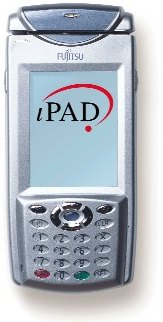
According to some sleuthing by The Jesus Tablet blog and given wider airing on Gawker, Apple filed requests with the US Patent and Trademark Office last September as well as December. The thrust of their argument seems to be that Apple opposes the trademark held by Fujitsu for the term "iPad" which is the name of that company’s handheld retail-related device.
This goes neatly hand in hand with Apple’s filing in July for trademark protection for the term "iPad" as well as their filing for the term "iSlate" and "Magic Slate." Some of this could just be covering bases, some of it could be a smokescreen designed to keep us thrown off the real scent. With such a secretive company as Apple, it’s a sure bet that there’s a misinformation budget thrown into their general marketing campaigns.
The curious thing, as noted in the above Gawker article, while Apple has filed numerous times in regards to the name "iPad," they haven’t as yet actually lodged any formal complaints as to the nature of their opposition. They have merely asked for more time. And the judge granted them an extension until February 28th, long after whatever will be unveiled next week will be unveiled. So keep on waiting. That’s what we’re doing.
More evidence of 'iPad' name, AT&T bracing for 'unannounced devices'
Apple has extended the time available for it to make a legal argument against Fujitsu over the "iPad" name according to Trademark Office documents, and AT&T may be prepping its network for "unannounced devices."
Evidence points to iPad as possible name
According to US Patent and Trademark Office documents uncovered by The Jesus Tablet blog, Apple has filed several requests asking for additional time to present evidence opposing Fujitsu’s "iPad" trademark application. Apple began the process last September, and has continued to ask to have the option open to oppose the name. Apple was granted an extension, giving the company until February 28 to make its case.
Apple’s interest in the "iPad" moniker may be simply due to the fact that it closely resembles the iPod name, as Apple is known for diligently protecting its brand. Although Fujitsu had first filed to trademark the name back in 2003, Apple has only recently shown interest, lending credence to the argument that it may indeed be the name of its new tablet device.
Last week, the IPAD name was registered in New Zealand, Australia and Trinidad and Tobago by a company called IP Application Development. Apple was also found to be behind the company Slate Computing in trademarking the name "iSlate." Apple has trademarked other names that could be used for the new device, including "Magic Slate."
AT&T prepping network for "unannounced devices"
AT&T "has apparently been meeting individually with regional executives to inform them of some changes to the AT&T network," sources tell Boy Genius Report.
"They seem to be focused on prepping the network to compensate for unannounced devices and also future devices that will use heavy data."
It was reported that one analyst believes AT&T will need to increase its investment in wireless infrastructure by $5 billion in order to equal Verizon’s levels of coverage and reliability.
Boy Genius Report has a respectable track record in forecasting AT&T and iPhone related announcements, but some of its Apple rumors have been less than accurate.
Is your secure USB flash drive really secure?
If you’re like me, you’ve taken to carrying important data on USB sticks or flash drives. They’re handy, you can use them on any PC, and with built-in encryption even if you lost them it was no big deal. Bad news: It’s now a big deal.
The German security company SySS GmbH discovered that many, but not all, of today’s encrypted USB sticks and flash drives are actually vulnerable to a relatively easy attack. It is not that the encryption itself-usually AES (Advanced Encryption Standard) encryption--that has been broken. It hasn’t been. Despite what you may have read from some fear-mongers, AES remains unbroken.
What has happened though is that it appears many vendors didn’t think through how they let people use the encryption in the first place. When you use a new encrypted USB drive for the first time, the drive already has a default device password. When the device’s software asks for you to enter a password, it places its device password on your computer to authorize your drive and your password. Once on the computer, SySS discovered that you could watch the password authorization process.
That was bad enough. With it, a patient cracker could tease out what the device password was. What was worse was that the company discovered that companies were using the same device password on all their drives. Whoops.
Armed with this information, SySS showed that you could modify the password authentication routine for a given device so that it would always authorize any password you’d care to give it. In short, SySS had created skeleton keys for many common secure USB drives. Or, as David Jevans, CEO of USB manufacturer IronKey Corp. told Computerworld, "So if a hacker is able to find those default set of characters, all they need to do is return those and they will have access to encrypted data on the drive."
Not all USB drives are vulnerable to this attack. IronKey does a better job of managing its device’s security by not using a static device password and by verifying a user’s password on the device’s hardware itself, rather than using the computer for verification.
If, however, you use an encrypted USB key drive or other storage device from Kingston Technology, SanDisk Corp., or Verbatim Corp., chances are if you lose your drive, someone will be able to quite easily break into it.
So, what should you do? Well, the first thing as always with any of these devices is to take care of it. If someone doesn’t have it in their hands, they can’t do anything with it. Other than that common-sense recommendation, if you own one of those drives, get anything potentially sensitive off it. Now.
Next, you should back up the drive and get ready to upgrade its software. In the case of SanDisk and Verbatim, you can get the update software from the company’s website. With Kingston, you’ll need to contact technical support first for an update. Once the update is in place, you can restore your data and get back to work.
Even with these updates, the password decryption on these drives is still done on the computer, but now each individual device has its own unique password. This blocks the simple attacks that SySS discovered and makes it orders-of-magnitude harder for a cracker to break into these drives. That said, drives like IronKey’s, which don’t do any password authorization on the computer, are safer still.