Creating the “Perfect” Portfolio

Many articles are floating around that tell web professionals exactly how to build an online presence. Techniques, best practices and all the other “what to do’s” can be great motivation, but that is exactly what this post won’t do.
By creating a perfect portfolio, you can gain more clients and have a more successful and sustainable career. To start with, we have to differentiate between “perfect” and “the right way” to do something. There is no right way.
“Perfect” vs. “The Right Way”
Let’s stop for a moment and reflect on the title of this post. How does one make the “perfect” portfolio?
We hear every day that no one is perfect, that we’re always learning and growing, which is very true. So, if we can never be perfect, how do we create something that is perfect?
There are only hundreds upon thousands of different ways, each of which is perfect for a particular individual at a particular point in their life.
We will always grow and improve, so each person’s ideal portfolio will fall out of perfection in time.
The goal today, though, is to create the most perfect portfolio for your current skill level. With it, you can grow and improve personally and professionally.
This is why this post is not a step-by-step guide of techniques and best practices. It is a set of guidelines that each professional can follow and adapt to their individual circumstances.
Of course, we can all review each other’s techniques and build upon them to suit our own needs (an excellent showcase is at the bottom of this post to get started). As you know, observing the methods of others is a great way to learn.
It’s important to understand the type of portfolio you are creating. Online portfolios showcase different types of work and so should have different styles and, in some cases, different functionality.
So, here is how to make the best portfolio — whatever your profession — to accurately represent yourself and your work.
The Profession
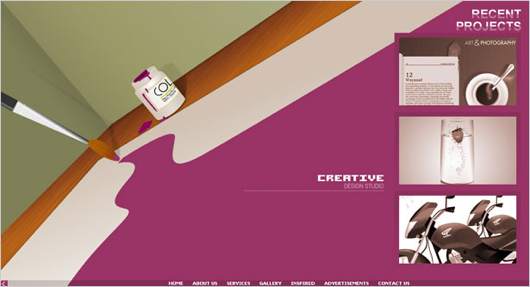
A web designer’s online portfolio should have a great style and unique design, but also user-friendly navigation, readable typography and other elements that clients will look for with their own projects.
That’s not to say that portfolios of professionals in other fields don’t have to be user-friendly. A graphic designer, for example, could bend the layout to better show off larger portfolio pieces. A client wouldn’t be as critical of the functionality in this case.
A web developer should provide more evidence of their work than just high-resolution images. Their portfolio should include links to (or examples of) projects they’ve worked on, as well as interactive effects within the design itself that the user can examine.
For example, a web developer could use jQuery to toggle content pieces open and closed. This would demonstrate a smart effect that might impress clients and show them that the developer knows what they’re doing.
It also shows that the developer is dedicated enough to add this functionality to their own portfolio, rather than just client websites, and is also aware of easy navigation options.
The Goal
The second thing to consider when reflecting on the type of portfolio you are creating is your overall goal.
Is it to land a full-time job, get some contract work, get into school? Each of these goals calls for different pieces to show off and possibly a different design style.
A company hiring for an internship may prefer a more formal portfolio, but a client searching for a freelance professional may want a more creative look.
If you are looking for a job, what kind of organizations will you be applying to? A web design firm may want highly creative professionals, while another organization may just want a decent-looking website that can accommodate a wide range of visitors.
Needless to say, any professional should know how to build standards-compliant, user-friendly and attractive websites. However, you have to think closely about what the organization, client or school you are pitching to most likely wants featured.
Overall, the portfolio should reflect who you are as a web professional and accurately demonstrate all of your skills.
This will lead to a much better match between you and the organization that ends up accepting you.
Show Off Your Best
This should be obvious, but many professionals don’t see the benefit.
Show only your best work. New designers or developers may be inclined to include all of their work if their body of work is small, just to prove they have experience.
However, by showing mediocre work, potential clients may fear — or, worse, expect — that they will get mediocre work for their project as well.
Below are a few stages that people reach with their online portfolio.
Having to Start from Scratch
If you are creating your portfolio for the first time, your likely have no pieces to show off. This can trouble many beginners.
With research, you’ll find many ways to gain your first clients, but we’ll focus here on what to do with those early achievements once you’ve made them.
Don’t get too eager. Putting a new piece up on your portfolio may be exciting, no matter how it turned out, just to say, “Look! I have professional experience.”
However, you should always favor quality over quantity. If you feel the work is good and accurately represents your skill level and design style, then show it off.
As any web professional knows, though, we sometimes have to create ugly work. Even after having warned the client about usability issues and ugly style, we can still be forced into making something that we know we could have — and would have — done better. Some clients are unbearably stubborn.
In these cases, just get the work done, get paid and then move on to a project that you’ll be able to shine on. At the very least, you may get a good testimonial out of the ugly project!