24 Examples of Web 2.0 and Traditional Design Rules Coming Together
In the large scope of the design world, the term “Web 2.0” is relatively a new one.
With it, comes its own set of standards, some strong, others not so strong, since Web 2.0 in itself is a very fickle, ever-evolving definition of design standards.
Countless examples of Web 2.0 sites have broken the rules of what was once considered strong design.
On the other hand, in many cases Web 2.0 has strengthened common design misnomers; it places a focus on usability, interface, and readability.
At its best, Web 2.0 stands as an equal to the traditional design rules practiced for centuries, though it is no doubt a reflection of our society in its current state of hustle and bustle.
Here’s a collection of 25 sites showcasing how Web 2.0 and traditional design practices can come together to form truly stunning websites.
1. Pixel Matrix Design
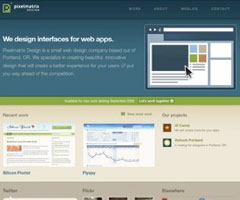
Josh Pyles is a nice guy, and he’s also a fantastic, disciplined designer. His latest iteration of Pixel Matrix is a stunner, and makes especially good use of color and a strong grid system. Browse over his portfolio and you’ll see that he carries this practice into his client work.
If you check out the “About” page (making note of the nice tab system in play), you can see that Josh has included a nice photo of his workspace.
Below this shot is a great balance of Web 2.0 styled fonts, which establish an extremely strong hierarchy of information. He keeps his own bio small and tucked into the sidebar, and balances the larger text of the content area with smaller, sophisticated type in the sidebar.
Traditional Aspects:
- Great grid system.
- Wonderful color theory
- Strong hierarchy of information
Web 2.0 Enhancements:
- Beautiful gradients.
- Subtle details.
- Large, highly legible font choices.
- A great number of ways to stay connected.
- Even the contact form has a nice implementation of rounded corners!
2. MuttInk
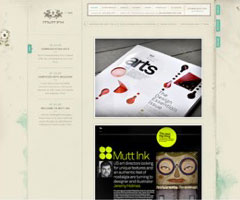
Lately texture seems to be the greatest thing since rounded corners, and though MuttInk’s site might not be classified as typical Web 2.0, one glance is all that’s required to know that Jeremy Holmes (the man behind the work) is an amazing designer and graphic artist.
An attention to detail, texture, and a strong identity places this as a personal fave.
Even though the days of overly-muted colors are somewhat behind us (which is a good thing, in my opinion), I’m still a fan of subtle, earthy tones that are complimented with bright accents, and MuttInk has pulled this off brilliantly.
The turquoise atop the beige really pops, and maintains the “drafting table” feel that permeates the site. And though the type is on the tiny side, and a bit tough to read in spots, it still looks great on the page.
Traditional Aspects:
- Extremely close attention to detail.
- Nice type (though perhaps too small).
- Great brand identity.
- Great use of space, particularly on the portfolio pages.
Web 2.0 Enhancements:
- Great use of texture.
- Big, professional images showcasing the work.
- Quick access to social linkage.
3. 45 Royale
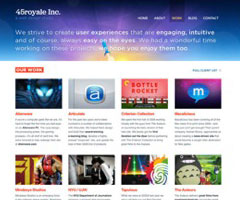
The portfolio over at 45 Royale not only showcases an amazing array of work, but it shows that the team behind the site understands good use of multiple design standards. It’s a fantastic blend of Web 2.0 fallbacks, but has a solid foundation in traditional design standards (and just look at those colors!).
In particular, 45 Royale has one of the best grid systems I’ve seen lately, and the images they’ve chosen to showcase the work really mesh well with the fluorescent colored header above.
Seeing the color theory and organization mesh with such great harmony is always a treat, and they’ve supplemented it all with a highly sophisticated blend of fonts, both large and small.
Bright colors surrounding a secondary palette of gray, white, and black? Awesome.
Traditional Aspects:
- One of the better examples of a grid system.
- Plenty of whitespace and breathing room.
- Brilliant color choice.
- Good flow of information.
Web 2.0 Enhancements:
- The colors simply sing…so much that listed it in both categories.
- Jumbo-sized type is highly legible, though tasteful.
- Great use of Illustration and graphics.
- Multitude of projects are well organized and nicely displayed.
4. Pinch Zoom
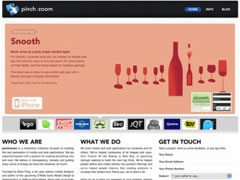
The important thing to keep in mind when we’re faced with the many technologies available these days, especially the fancy fades and trickery made possible by JavaScript, is to taper them and reign them in.
Remember the late nineties when Flash was all the rage? Remember how sick of Flash we all got afterwards? Good Web 2.0 standards are just as much about discipline as it is about design, and Pinch Zoom has it well under control.
They sprinkle their site with the fancy goodness, yet keep it lean and fun, with virtually zero time waiting on the images.
Traditional Aspects:
- Another great grid system (seeing a pattern here?).
- Black on white never seems to get old.
- Nice balance of fonts and headlines. (The small font, though legible, could maybe be a point size or two larger).
Web 2.0 Enhancements:
- The JavaScript portfolio slider is dang fun and effective.
- Interface is minimalist and direct.
- Varied use of Illustration is a great touch.
- Embraces the web’s current technology without becoming cumbersome.
- Unique solutions to page layout (Check out the mega-dropdown when clicking the info tab. There’s virtually an entire website hiding up there!).
5. Cameron Moll
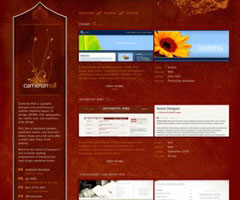
His blog site tends to fall within the traditional side of sophisticated design and small fonts there’s no denying the elegance and beauty of his portfolio page, which is a fantastic balance of the new and the traditional.
The colors are vibrant and the font choices mesh with the overall feel, but again, the type can get pretty small in places, which is a Web 2.0 no-no. Cameron has found great success and is the man behind Authenticjobs.com, a great resource for designers.
Traditional Aspects:
- Well-structured content.
- color variations are a nice touch.
- Type looks elegant, though tends to ride on the small side of the spectrum. Even so, it’s legible and looks nice.
Web 2.0 Enhancements:
- Very nice use of texture.
- Portfolio contains nice images of the work, which are very straightforward and easy to navigate.