The Art of Branding Yourself and Your Freelancing Business
Just as it is for big corporations, successful branding is essential to the success of a freelancing business and to just one self-employed web worker. It is often times overlooked, most likely because many don’t realize the large benefits that can come from it.
A good logo can do wonders for a self-employed freelancer, but branding identity goes far beyond that, into entire website development, content, business cards, and even into offline scenarios.
In this article, we’ll take a closer look at ways to define a brand for something as unique as a freelancing business, and what one needs to do to get started on the right track to a successful brand.
A good brand will lead to success now and in the future, and that is essential for a self-employed person that doesn’t ever want to be forced back into a 9-5 job. If created correctly, a good brand will:
- Create a memorable business
This will make the clients want to come back to, creating user loyalty. - Create a basis for the business to expand in new ways
When launching a new project, a brand can be used to jump-start it successfully. - A good brand confirms credibility
This is top concern among many potential clients. - A properly implemented brand will target the right clients
This will help finding the right clients looking for exactly your style.

1. Define Your Business Goals
Before one even gets started in the design process of branding, one must define what they want the brand to communicate.
In order to do that, we must define a few specific things in general, the first being the freelancing business’s goals.
Beyond helping to develop a brand, defining business goals will help in a number of other ways.
For one, it will help visualize the ultimate goals of the business, helping smaller goals become more proactive in reaching the long-term accomplishments.
It will also keep you, as the leader of the business, on track, from personal self-management, to anyone you may be managing in the future.
Getting off track is why many businesses fail, and why many freelancers eventually go back to a day job they hate. Goals and a business plan will help you to stay on track.
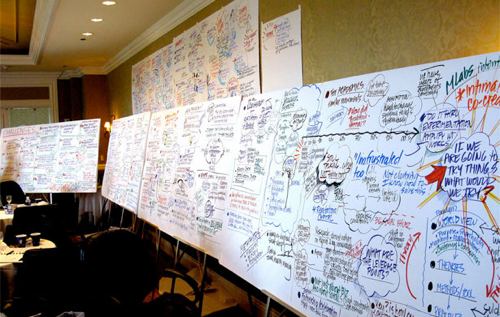
Take some time aside to set goals properly. Write them down, detail them, and think about them critically. Goals can help plan the future of a freelancing career for years to come. Below are ten items to keep in mind when setting goals:
- Be specific
Losing sight of where you’re going is an issue that comes from having no goals, but having unspecific goals will also create this problem. - Create a business plan
This should be a separate article in itself, but it is a great way to outline goals as well as include finances and tools into accomplishing those goals. - Set short-term goals along with your long-term goals
It’s easy to turn ultimate dreams into business goals, as we should, but shorter, more technical goals can track success better. - Keep committed
This is an obvious point, but think of lifestyle changes that will help you commit to the goals that are made. For example, if you would like to expand your skill set, set aside a time each day in your schedule to study. - It may help to make goals public
Make your freelancing business and goals associated with it as public as possible. If this means sharing with only friends and family, then so be it. It will help to motivate you to complete goals — keeping your business on track. - Be realistic
It’s ok to dream high, but don’t set unachievable goals for a time given. - Have relevant goals
If a goal ends up providing little or nothing to the growth of the business, then it is pointless. For example, don’t set a goal to take on another client each week that you can’t handle — this will likely only limit the time you have to grow and market the business in other ways. A relevant goal would be, for example, to expand to more than a 1-man (or 1-woman) operation. - Create an action plan for each goal
“I’d like to someday own my own design firm”, is just not good enough. Have a goal-by-goal plan to complete broader goals like this. In other words, make the goal actionable. - Keep everything in line when working on a new goal.
Reaching goals means business and lifestyle changes, so make sure your finances and other forms of security are still tightly in place throughout the process. - Take a step back to analyze the progress
Take what you’ve learned onto the next goal. As an example, if you’re trying to market your portfolio better, what marketing strategies worked? Which strategies didn’t work?
2. Define Your Target Audience
After defining business and career goals, you need to define who you’ll need to attract to keep the business alive.
These people are, of course, the clients. Who is your ideal client? Beyond clients, are you willing to work with others on group projects (i.e. developer and designer)? Who would that ideal partner be?
Target audiences are often more related to one that sells products, or to a blog or other form of website that relies heavily on its visitor count. However, selling services is no different. One must recognize this and take the necessary steps to define their target audience.
Both how a brand is designed visually and how it is presented professionally will lean towards a certain type of person.
This person should be someone you’d like to work with, as well as the type of person that will help your brand grow.

When seemingly ready to open up Illustrator and start on a logo design, wait one more second and get prepared for the visual aspect of the brand-to-be.
Below are some questions to ask about the target audience before jumping into the design phase of your brand.
What is your design style?
If it is more creative, you may want to appeal to groups that would need a creative website.
If it is more Web 2.0 and sleek, you’re going to want to appeal to business owners or vendors of “high-technology fields.”
Consulting agencies, app websites, and other sites of the like would be great targets.
To What Level Are you Willing to Help and Communicate?
It’s true; all clients have varying levels of understanding web technologies, and well, technology in general.
Do you want to attract a client that knows nothing of the web world, in which you will be responsible for providing an easy to maintain website? Or, would you rather communicate with a group of web professionals, sending out the final project to one client?
This can dig deeper into clients as well. Attracting a client, for example that is maintaining a site dedicated to some sort of technology may be easier to communicate with about technology if you prefer that.
Any other type of website that coincides with the “offline world” though may hold a client that would need a simpler website.
What work would you like to be responsible for?
Many of us don’t like all the work that comes from freelancing. Especially in the world of website creation, many clients want us to do it all — design, develop, market, and more.
If you specialize in one area though, it may be beneficial to have part of your target audience be those looking for partnership projects.
For example, if you are a designer, you may want to include web developers in your target audience so that they could contact you to partner up on a bigger project.
This way, whether you know how to or not, you wouldn’t be stuck with the coding and you can stick with what you love.
Define it on Paper
After asking these questions and researching a bit more, write out your target audience in a list.
Each item should not be a single-line type of person, like “Clients with a lot of web experience”, but rather a small very descriptive paragraph.
The more detailed the description, the more success you’ll have once it’s time to start the design process of the brand.