When To Relaunch The Site Redesign
Redesigning a website is a big job and should be handled with care. Many of us with a portfolio, blog or other website have probably thought about a redesign or at least know we need one. For many designers, though, that redesign never comes. As big and important as it is, the job can turn into a hugely daunting task that we put straight on the backburner of our to-do list.
Why is doing a simple redesign so daunting? Why is it so difficult to follow through, even when we’ve decided to do it? How can we work on designing our clients’ websites successfully every day and then perpetually neglect our own?
The problem is both a lack of correct planning and a lack of understanding of the root need for the redesign. Once we’ve identified these elements, we’re set for success. In this article, we’ll discuss how to plan and execute a redesign, and how to find the perfect timing for it.
What’s All The Fuss About?
Every designer has their own clients and projects. Every day, the designer handles their clients and earns a living for their hard work. When they have spare time on their hands, they may work on side projects that help their personal growth or gain marketing exposure, or both. Sometimes, that side project is to update or maintain their portfolio.
To most, this schedule is all too familiar. The point being: we usually give our side projects a low priority, no matter how much we love them. Although we’d like to develop our website, our time is limited, and clients come first. It’s no wonder that we never find the time or energy to redesign that special side project of ours.
We usually manage to squeeze in time to work on our redesign, usually at the end of the day, in the hope of finishing it a bit at a time. This may seem viable at first, but trying to be productive at the end of a long, stressful day is no way to go about this effectively. We’ll often find ourselves thinking, “I’ll work on it tomorrow.”

Another reason we don’t follow through is that we can’t articulate why we need a redesign in the first place. What should be included, and what should the process look like? When we finally open Photoshop to get started, we realize we don’t know where to begin. All we know is that, for some reason, we are not satisfied with our current design. This leads us to our only tangible conclusion: the new design has to be better than the last.
And so we are never fully motivated to work on it: we get tired and confused and we put a lot of pressure on ourselves for perfection.
Understanding why we have failed, though, is the first step to success. Let’s look at how to combat all of these obstacles and get that redesign done. Let’s finally cross it off our to-do list, shall we?
Should You Do It At All?
Not every website should be redesigned—at least not at any given time. Being bored with your current design is no reason to change it. In fact, that’s a very poor reason. The purpose of a redesign is to improve usability, update the brand or take the website into a new era.
If you have no good reason for it, a redesign could actually be detrimental. Below are a few reasons why:
- People love consistency. We love consistency in the websites we visit every day. Whether your website has a large following or not, its design is tightly bound up with its identity and is, in fact, part of your branding. With a complete overhaul, would the website still be recognizable to those people? Would they love it just as much, and would it suit their tastes?
- Redesigns take time. Planning, designing, trying different things, detailing, development: this is all time taken out of your work day. The redesign may not be a paying job, but it can be worth it if it serves a clear purpose. If it’s needed, take the plunge; if not, why bother? Ultimately, don’t redesign out of boredom.
- With incorrect or careless planning, you could seriously impair usability or degrade elements. In trying to improve the design, we could very well be making it worse.
We crave a redesigning so much sometimes that we don’t consider its purpose or how a misguided attempt can lead our business astray. If your website could use a bit of cleaning up and not a complete overhaul, consider the option below.
Redesigning vs. Realigning
Cameron Moll wrote a popular article on A List Apart way back in 2005, and it is just as relevant today. Good Designers Redesign, Great Designers Realign compares people who constantly want to redesign their website and people who upgrade or “tweak” their website as necessary.
“…the differences between Redesigners and Realigners might be summarized as follows: The desire to redesign is aesthetic-driven, while the desire to realign is purpose-driven. One approach seeks merely to refresh, the other aims to fully reposition and may or may not include a full refresh.”
Check out the full article to see exactly what he means and for further arguments. Before undertaking a redesign, ask yourself, “Does this website need an entirely new look or just a few tweaks to make things look and function better?”
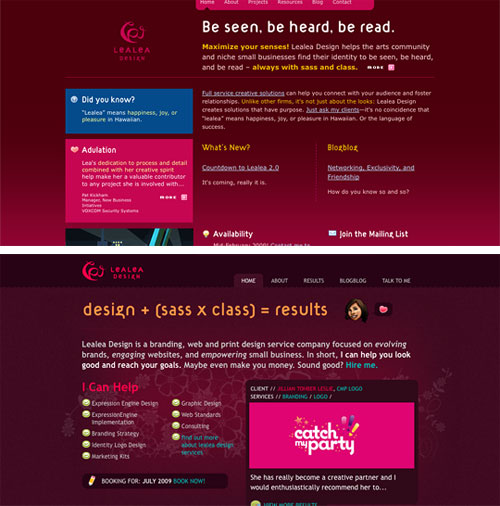
If you’ve decided that a complete redesign is not right for your website, then congratulations: you’ve just saved yourself a lot of time and unproductive work. You may have chosen instead to realign by updating the look of the website, adding interactive elements, improving user-friendliness or something else entirely. You may have chosen to cut things out and minimize the design to highlight the bare necessities.
If you’ve decided that a redesign is still necessary, which it could very well be, then the rest of this article discusses how to make it successful. The first phase is to plan adequately.
Finding The Right Time
Because a redesign will take up so much time, planning ahead for the project’s specifics and timeframe is important. A designer should create a timeline and set a schedule for their own project, just as they would for a client.

Redesigning Is A Project, Not A Chore
Don’t set up a schedule that allows you the excuse of, “I’ve done enough for today” or “I can do this tomorrow.” If you set aside two hours at 1:00 pm every working day, the redesign will get done. Make it a task of your working day, rather than a chore at the end.
Just as you allocate time for new clients, do the same for this project until it is completed. Once you have set aside time each day for it, be conscious of it and schedule other client projects accordingly. You may need to take on fewer clients during this phase, so be prepared financially as well.
What Time Is Best for the Website?
Finding the right time for the website is just as important as finding the time in your schedule. If you’re redesigning your portfolio, are you in the midst of pursuing any clients. If so, would seeing your website under construction scare them off?
Do you plan on any big changes, upgrades or features that could coincide with the redesign? For example, Smashing Magazine timed its redesign to coincide with the introduction of the Smashing Network, rather than just redesign the blog alone. Redesigning any sooner or later would have been pointless; the new feature made a greater impact by being a part of this other change.
Review your goals for the website and upcoming changes. Planning your redesign around them would probably be most effective.